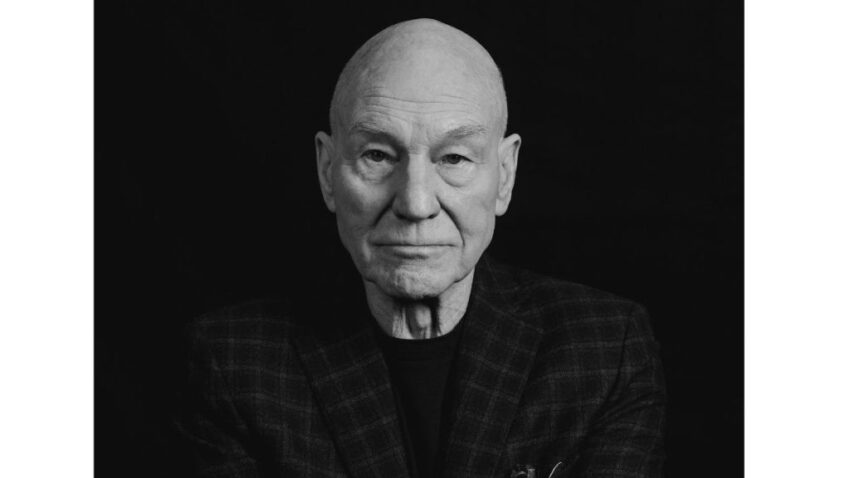
Sir Patrick Stewart, the celebrated British actor best known for playing Captain Jean-Luc Picard in Star Trek: The Next Generation and Professor Charles Xavier in the X-Men films, was an atheist and a committed humanist.
Although he did not identify with organised religion, Stewart supported values such as compassion, equality, reason, and human dignity. His beliefs were reflected not only in his public advocacy but also in his longstanding association with Humanists UK, where he served as a patron.
His religious outlook also had some interesting nuances. While he identified as an atheist, he occasionally spoke about experiences involving spirituality, a sense of presence, and the possibility that existence might involve something beyond what people ordinarily understand.
Was Patrick Stewart an Atheist?
Yes. Patrick Stewart openly identified as an atheist and was known for his opposition to organised religion.
His position was not simply a private personal belief. He also supported organisations and causes that promoted secularism, freedom of thought, and ethical living without requiring religious doctrine.
Stewart’s atheism was publicly documented in interviews and profiles throughout his career. His wife, singer-songwriter Sunny Ozell, also described them both as atheists during a 2015 interview.
However, Stewart’s rejection of organised religion did not mean that he dismissed kindness, morality, or the importance of human connection. These principles were central to his humanist outlook.
Was Patrick Stewart Also a Humanist?
Yes. Stewart was a longtime patron of Humanists UK, an organisation that represents non-religious people and promotes humanism.
Humanism is a philosophical approach to life that places importance on human welfare, reason, compassion, responsibility, and ethical decision-making. It does not require belief in a god or adherence to a religious tradition.
For Stewart, humanist principles were closely connected to the values he admired in people and society.
His association with Humanists UK reflected his commitment to a more tolerant society, individual freedom, and the belief that people can lead meaningful and ethical lives without religious instruction.
Following his death in October 2026, Humanists UK described him as a committed humanist who championed reason, empathy, and social progress.
Did Patrick Stewart Believe in God?
Stewart identified as an atheist, meaning he did not hold a conventional belief in God.
However, his comments about spirituality suggest that his personal understanding of existence was more complicated than a simple dismissal of every experience associated with the supernatural.
During a 2023 interview with NPR, Stewart was asked whether he believed in spirits, God, or things greater than humanity.
He responded that he believed in a sense of presence and described experiences in which he felt surrounded by something beyond himself.
He also explained that he did not know exactly what happens after death, although he had a deep feeling that existence might involve more than the life people experience.
These comments provide useful context when discussing his beliefs. They do not establish that he converted to a religion or abandoned atheism. Rather, they show that he was comfortable acknowledging personal experiences and questions that he could not fully explain.
Why Was Patrick Stewart Associated With Humanists UK?
Stewart’s relationship with Humanists UK reflected his support for secular values and the idea that people should be able to build meaningful lives through reason, compassion, and responsibility.
The organisation campaigns for the rights of non-religious people and promotes humanist approaches to ethical questions.
As a patron, Stewart helped bring public attention to humanist principles through his reputation and advocacy.
His association also connected with his wider involvement in social issues, including women’s rights, civil liberties, domestic abuse awareness, and assisted dying.
His support for these causes reflected his belief in personal dignity and the importance of allowing people to make decisions about their lives.
Did Patrick Stewart’s Star Trek Role Reflect His Personal Beliefs?
Stewart’s portrayal of Captain Jean-Luc Picard became one of the defining performances of his career.
Picard was often presented as a thoughtful and principled leader who valued diplomacy, scientific understanding, cooperation, and respect for different cultures.
These qualities had a natural connection with Stewart’s humanist outlook.
In a 2023 NPR interview, Stewart reflected on the influence of the character and explained that playing Picard had given him ideas about how he could become a better person.
He also recognised that Star Trek had become meaningful to viewers in ways that went beyond entertainment. For many fans, its themes of hope, morality, cooperation, and humanity offered a source of inspiration.
Although Picard is a fictional character, the values associated with him often overlapped with the principles Stewart supported in his own life.
Did Patrick Stewart’s Wife Share His Religious Beliefs?
Stewart married American singer-songwriter Sunny Ozell in 2013.
In a 2015 interview, Ozell said that both she and Stewart were atheists. She also explained that they believed in energies and placed importance on maintaining a positive outlook.
Their comments illustrated how someone can reject organised religion while still finding meaning in optimism, personal relationships, and experiences that feel spiritually significant.
The couple’s shared outlook was therefore not based on traditional religious practice but on their own understanding of life and human connection.
Patrick Stewart’s Religious Background
Patrick Stewart was born on July 13, 1940, in Mirfield, West Yorkshire, England.
He attended schools associated with the Church of England during his childhood. However, his adult public identity was firmly associated with atheism and humanism rather than Christian religious affiliation.
His life experiences, including a difficult childhood, later became part of his public advocacy for survivors of domestic abuse.
He spoke openly about witnessing violence against his mother and used his public platform to support organisations working to protect women and children.
His commitment to human dignity and social responsibility was consistent with the humanist principles he publicly supported.
Patrick Stewart’s Death and Humanist Legacy
Humanists UK announced on October 29, 2026, that Sir Patrick Stewart had died at the age of 86.
The organisation remembered him not only for his remarkable acting career but also for his longstanding commitment to humanism.
His legacy includes decades of work in theatre, television, and film, alongside his support for secular values and social causes.
For audiences around the world, he will remain closely associated with Captain Jean-Luc Picard, a character whose emphasis on reason, diplomacy, and cooperation helped make Star Trek meaningful to generations of viewers.
His public life also demonstrated how an individual can reject organised religion while continuing to champion compassion, morality, and the well-being of others.
Key Facts About Patrick Stewart’s Religion
| Detail | Information |
|---|---|
| Full name | Sir Patrick Stewart |
| Date of birth | July 13, 1940 |
| Date of death | October 28, 2026 |
| Age at death | 86 |
| Nationality | British |
| Religious identification | Atheist |
| Philosophical outlook | Humanist |
| Humanist organisation | Humanists UK |
| Role in organisation | Longstanding patron |
| Wife | Sunny Ozell |
| Wife’s publicly stated belief | Atheist |
| Famous role | Captain Jean-Luc Picard in Star Trek |
| Other notable role | Professor Charles Xavier in X-Men |
Disclaimer
This article draws on Patrick Stewart’s public interviews, published profiles, and statements from Humanists UK. His religious identification as an atheist and humanist is based on his publicly documented views and organisational association. His comments about spirituality and the possibility of existence beyond ordinary life are presented in context and should not be interpreted as evidence of a religious conversion.